Rosemary oil: scent, origin, chemotypes & uses
A guide by the Casse-Q team – we have been hand-filling our essential oils in Bremen, Germany, since 2025. Last updated November 2026.
Rosemary smells of the Mediterranean, herb gardens and summer holidays. Rosemary essential oil is one of the most popular herbal scents of all. Here you'll learn how rosemary oil is obtained, what chemotypes are, how it smells, how to use it and what to look for when buying.
In short: rosemary oil is steam-distilled from the flowering herb of Rosmarinus officinalis and smells clear, herbal and fresh. Depending on the chemotype (cineole, camphor or verbenone) it smells cooler, more pungent or softer. In a diffuser, 3–4 drops are enough, nicely combined with lemon or lavender. Casse-Q rosemary oil is the cineole chemotype from Spain – 100% pure and hand-filled in Bremen, from 10 ml.
Contents
- What is rosemary oil?
- The chemotypes: cineole, camphor, verbenone
- How does rosemary oil smell?
- Ideas for use
- Blends with rosemary oil
- Rosemary oil, rosemary extract and rosemary-infused oil
- Safety information
- Buying rosemary oil: what to look for
- FAQ
What is rosemary oil?
Rosemary (Rosmarinus officinalis, now also classified as Salvia rosmarinus) is an evergreen shrub of the mint family, native to the whole Mediterranean region. For the essential oil, the leaves and flowering tips are steam-distilled. The main producing countries are Spain, Morocco, Tunisia and France.
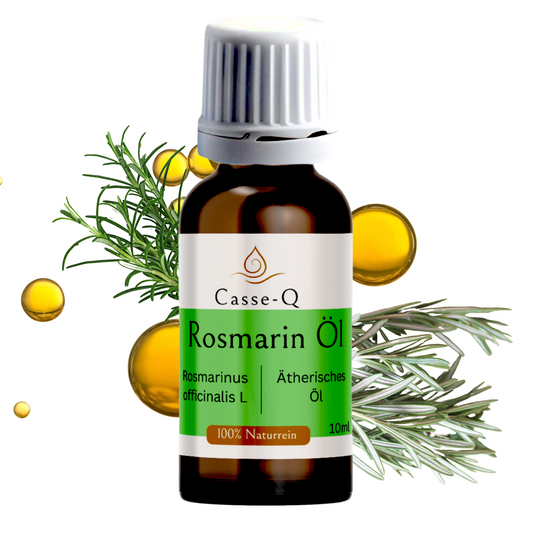
Our rosemary oil comes from Spain and is the cineole chemotype (Rosmarinus officinalis ct. cineole).
The chemotypes: cineole, camphor, verbenone
Depending on location, climate and soil, rosemary produces different main constituents. These are called chemotypes (abbreviated "ct."). Botanically it's the same plant, but the scent differs noticeably:
| Chemotype | Typical origin | Scent |
|---|---|---|
| ct. cineole | Spain, Morocco, Tunisia | clear, cool, fresh like eucalyptus |
| ct. camphor | Spain, France | pungent, strong, camphoraceous |
| ct. verbenone | Corsica, southern France | softer, herbal-sweet, rarer and more expensive |
A reputable supplier states the chemotype on the label or in the product description. Without it, you don't know exactly which scent you're getting.
How does rosemary oil smell?
Rosemary oil (ct. cineole) smells clear, herbal, fresh and slightly woody – with a cool note reminiscent of eucalyptus. It is a top-to-middle note: immediately present, but longer-lasting than citrus. In blends, rosemary brings clarity and a green, Mediterranean freshness.
Ideas for using rosemary oil
- In the diffuser: 3–4 drops in 150–200 ml of water – popular in the study, the home office or in the morning. More in our diffuser guide.
- In an oil burner: 2–4 drops in the water bowl.
- In a sauna infusion: 5 drops per litre of infusion water, nicely combined with lemon, eucalyptus or lavender. Recipes in our sauna guide.
- In a room spray: as a herbal component together with citrus oils – see making your own room sprays.
- In DIY cleaners: as a fresh scent note – see DIY cleaning products with essential oils.
- For scented candles: rosemary gives candles a clear, Mediterranean note – lovely combined with lemon or lavender.
Blends with rosemary oil
Four diffuser recipes, each in 150–200 ml of water:
- Clear head at the desk: 3 drops lemon · 2 drops rosemary · 1 drop peppermint
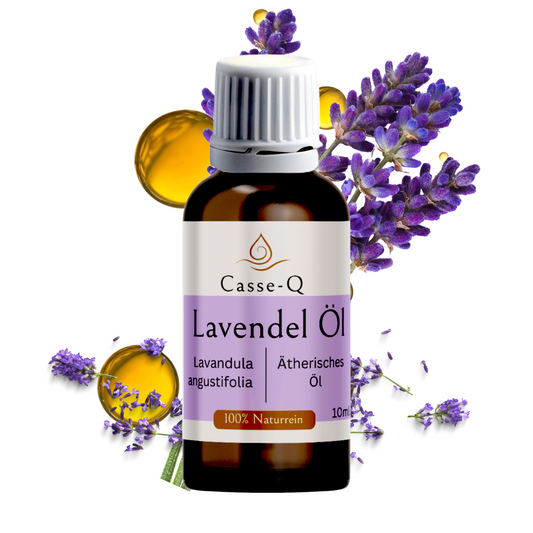
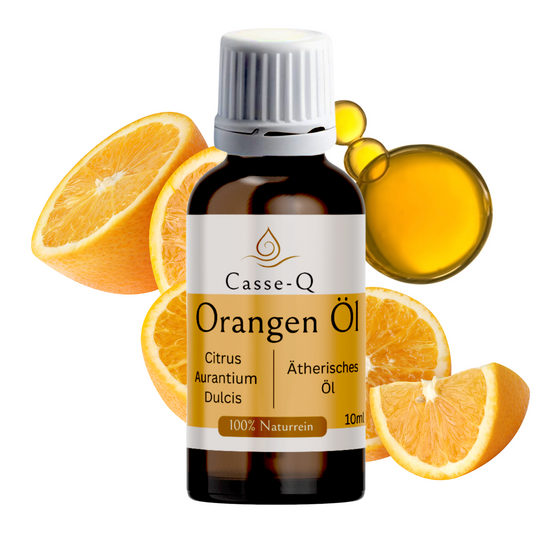
- Provence: 3 drops lavender · 2 drops rosemary · 1 drop orange
- Herb garden: 2 drops rosemary · 2 drops eucalyptus · 2 drops lemon
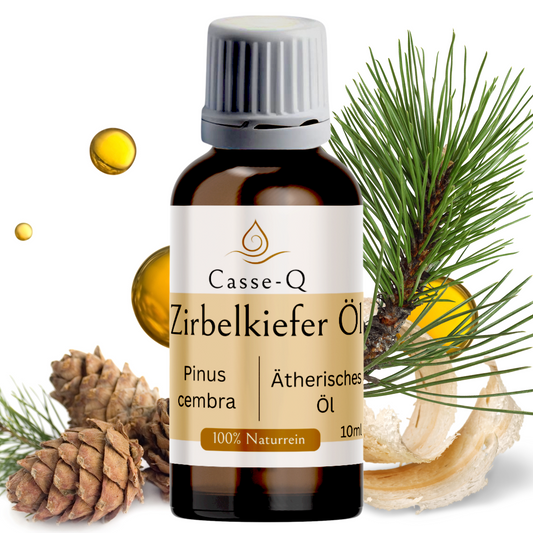
- Forest herbs: 2 drops rosemary · 2 drops Swiss stone pine · 1 drop cedarwood
You'll find rosemary ready-blended in our Kräuterwind blend with eucalyptus, thyme and peppermint. All herbal scents are in our herbal & green oils category.
Rosemary oil, rosemary extract and rosemary-infused oil
- Rosemary essential oil: a highly concentrated, distilled scent oil – for room scent, sauna and your own blends.
- Rosemary-infused oil (macerate): rosemary sprigs steeped in a fatty vegetable oil. Mild, not an essential oil.
- Rosemary extract: used in the food and cosmetics industries and different from the essential oil.
- Rosemary for cooking: fresh or dried needles – not the essential oil.
Our rosemary essential oil is intended for room scent and scent blends – not for consumption and not as a hair or skin care product.
Safety information
- Do not ingest and do not apply undiluted to the skin; it may cause skin irritation and allergic reactions. Avoid contact with the eyes.
- Children: keep out of the reach of children. Do not use oils containing cineole and camphor, such as rosemary, around babies and toddlers – the German Federal Institute for Risk Assessment (BfR) advises particular caution with such oils for young children.
- Pregnancy, breastfeeding, epilepsy, asthma: consult a doctor first.
- Pets: animals are sensitive – more in our guide essential oils and pets.
- Flammable: keep away from sources of ignition.
- Storage: dark, cool and tightly closed – stored like this, rosemary oil keeps for several years. More in our guide storing essential oils correctly.
Buying rosemary oil: what to look for
- Botanical name Rosmarinus officinalis and the chemotype (e.g. ct. cineole).
- 100% pure, without additives, with country of origin and batch number.
- Amber glass bottle and complete hazard information on the label.
- A plausible price: rosemary is not an expensive oil – although the verbenone chemotype costs considerably more than cineole or camphor.
Our rosemary oil is 100% pure, steam-distilled from the herb of Rosmarinus officinalis ct. cineole from Spain and hand-filled in Bremen – from 10 ml to 1 litre. More criteria in our guide buying essential oils: how to recognise quality.
FAQ: rosemary oil
What does "ct. cineole" mean on rosemary oil?
"ct." stands for chemotype. Rosemary oil ct. cineole contains a particularly high amount of 1,8-cineole, which gives it a clear, cool scent similar to eucalyptus. There are also the camphor (more pungent) and verbenone (softer) chemotypes.
How many drops of rosemary oil in a diffuser?
3–4 drops in 150–200 ml of water, on its own or blended with lemon, lavender or orange.
Can I use rosemary oil for my hair?
Our rosemary essential oil is intended as a scent oil for room scent, sauna and scent blends, not as a hair or skin care product. For hair care, use cosmetic products made for that purpose.
What blends well with rosemary oil?
Lemon, orange, grapefruit, lavender, peppermint, eucalyptus, thyme, Swiss stone pine and cedarwood.
How long does rosemary oil keep?
Stored dark, cool and tightly closed, several years. If it smells dull or rancid-resinous, it has oxidised.
🌿 Casse-Q – natural oils with character
Clear, herbal, Mediterranean: discover our rosemary oil and all herbal & green oils – 100% pure and hand-filled in Bremen.