Buying essential oils: how to recognise real quality
Two bottles, both labelled “10 ml essential oil”. One costs 3.90 €, the other 29.95 €. From the outside you cannot tell the difference. On the label you can – if you know what to look for.
Pure, 100% pure, fragrance oil: the terms sorted out
A pure essential oil consists solely of what was obtained from the plant by steam distillation or cold pressing. Nothing diluted, nothing added, nothing recreated.
A fragrance or perfume oil is something else: usually a blend of synthetic aroma chemicals, often extended with a carrier oil. That is not automatically bad – for a scented candle it is perfectly fine. It is simply a different product, and it costs a fraction to make.
The claim “100%” on its own says little. A hundred percent of what? Only together with a botanical name does the statement become verifiable.
The six things to look for
- Botanical name – if it is missing, you do not know which plant is in the bottle.
- Plant part and extraction – leaf or flower, distilled or pressed: both change the scent and the price considerably.
- Country of origin – a supplier who knows their sources can name them.
- Batch number – without it, a bottle cannot be traced.
- Amber glass – essential oils age in light. Clear glass is a bad sign.
- Price per millilitre – the only figure that makes offers genuinely comparable.
Why the botanical name reveals so much
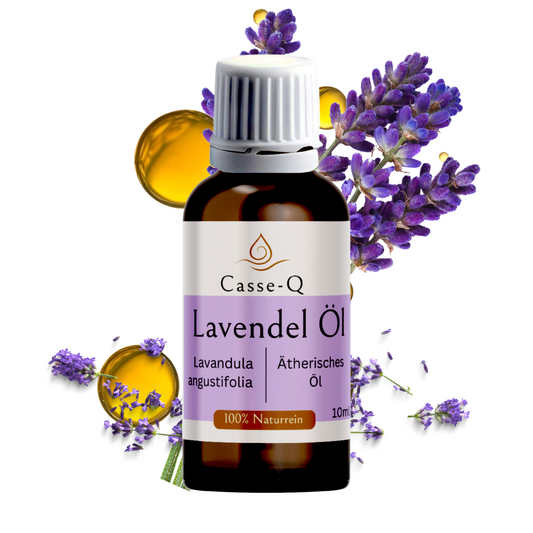
“Lavender oil” can mean very different things. Lavandula angustifolia is true lavender, grown at altitude, soft and floral. Lavandula x intermedia, lavandin, is a higher-yielding cross with more camphor and a much lower production cost. Both may simply be called “lavender oil”. Whoever puts the botanical name on the label is making a commitment.
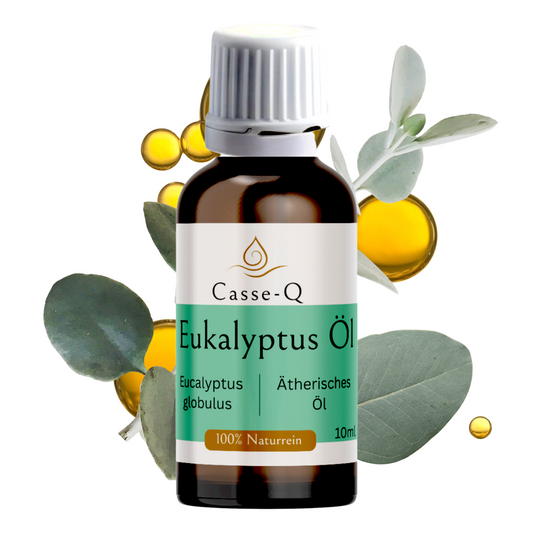
Eucalyptus is similar: globulus, radiata and citriodora smell completely different and cost different amounts. Without a botanical name you are buying a surprise.
Calculate in euros per millilitre
The bottle price is almost useless for comparison, because fill volumes range from 5 to 100 ml. A short calculation brings clarity:
| Bottle | Price | Price per ml |
|---|---|---|
| 10 ml | 12.95 € | 1.30 € |
| 50 ml | 39.95 € | 0.80 € |
| 100 ml | 69.95 € | 0.70 € |
Larger bottles are almost always cheaper per millilitre. That only pays off for oils you really use often – otherwise the rest ages before you get through it.
What a certificate of analysis does – and does not do
A certificate of analysis records which main components were measured in a particular batch. It shows that an oil has not been obviously adulterated and places it within the usual range for its plant species.
What it does not do: it says nothing about how an oil smells, and it does not replace judgement. Two oils with almost identical analyses can come across very differently, because the minor components matter. And a certificate only ever applies to the batch it belongs to – which is why the batch number belongs on the bottle.
Is a cheap oil automatically a bad oil?
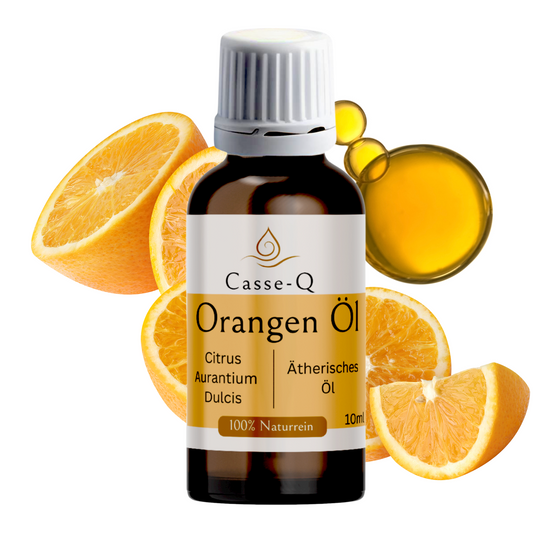
No. What matters is whether the price fits the plant. Orange oil is a by-product of the juice industry, available in large quantities and therefore naturally inexpensive. Rose oil needs thousands of hand-picked blossoms for a few millilitres and simply cannot be cheap.
So the suspicious item is not the inexpensive orange oil but the suspiciously cheap rose or jasmine oil. And the reverse holds too: expensive does not automatically mean good. A high price can equally come from distribution structures and commissions.
Frequently asked questions
How can I spot an adulterated oil at home?
One simple indicator is the paper test: a drop on paper should have largely evaporated after a few hours. If a greasy mark remains, that points to a carrier oil. The test is not proof, but it is a useful first impression.
Does an oil have to be organic to be good?
An organic seal says something about cultivation, not about the quality of the distillation. Both are worthwhile, but they are not the same thing.
Why is there no filling date on some bottles?
Because the batch number carries that information. Through it, the manufacturer can trace when the bottle was filled.
Which oil is a good place to start?
Lavender, lemon and eucalyptus cover three very different scent worlds and combine with almost anything. If you want to try several at once, a discovery set works out cheaper than individual bottles.
Not sure which direction suits you? The scent finder takes you to suitable suggestions in three questions. All oils with botanical name, plant part and origin are in the essential oils overview.