Essential oils in the diffuser: dosage, blends and care
For most people the diffuser is the way into essential oils – and the place where the most oil gets wasted. Here are the dosages, three proven blends and what actually matters when caring for the device.
The devices
| Type | Principle | Good to know |
|---|---|---|
| Ultrasonic diffuser | water plus oil, fine mist | economical, quiet, lightly humidifies the air |
| Nebuliser | neat oil, no water | very intense, higher consumption |
| Oil burner | water over a tealight | inexpensive, heat alters the scent slightly |
| Aroma stone, scent wood | oil evaporates passively | ideal for small rooms and wardrobes |
For everyday use the ultrasonic diffuser is the best compromise between consumption and scent intensity.
How many drops in how much water?
| Room size | Water | Drops |
|---|---|---|
| Desk, small bathroom | 100 ml | 2–3 |
| up to 15 m² | 100–150 ml | 3–4 |
| 15–25 m² | 200–300 ml | 5–6 |
| over 25 m² | 300–500 ml | 7–9 |
Two notes on this. First: intense oils such as thyme, clove or oregano belong at a far lower dose, where two drops are often enough. Second: less is usually better, because the nose adapts to a scent after about twenty minutes. Top up then and you will barely notice a difference yourself – but visitors certainly will.
Intervals instead of continuous running
Most devices have an interval mode. Thirty minutes on, thirty minutes off achieves more than continuous running: the scent stays noticeable, consumption halves, and the room air does not get over-humidified.
Three blends to copy
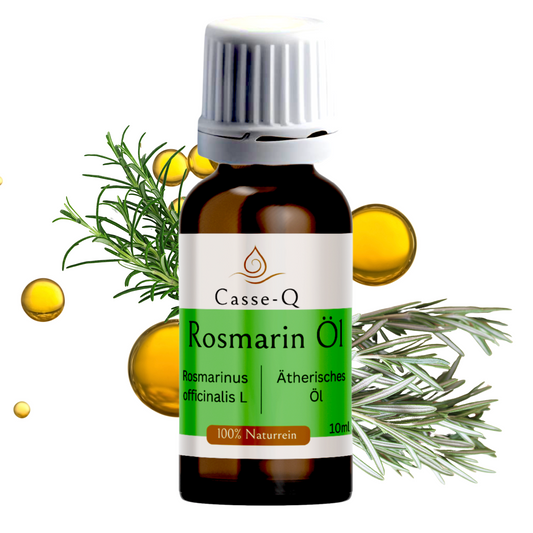
Clear head for the study: 3 drops peppermint, 2 drops lemon, 1 drop rosemary.
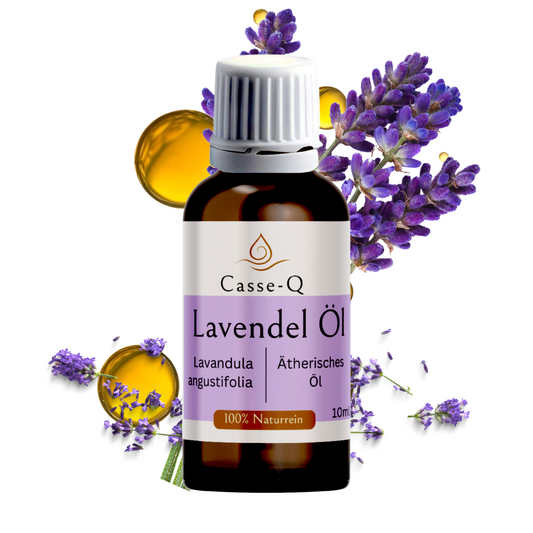
Soft evening for the living room: 3 drops lavender, 2 drops orange, 1 drop cedarwood.
Forest walk for hallway and entrance: 3 drops Swiss stone pine, 2 drops spruce needle, 2 drops orange.
As a rule of thumb for your own blends: two parts top note (citrus), two parts heart note (herbs, flowers), one part base note (wood, resin).
Cleaning – the most underrated point
Essential oils leave a film that builds up over time and distorts the next scent. Once a week is enough: pour out the water, rinse the tank with a little washing-up liquid, wipe the ultrasonic membrane carefully with a soft cloth. Once a month, a run with water and a dash of vinegar or citric acid takes care of limescale.
Do not use abrasive products, and never immerse the base of the device in water.
Which oils are less suitable
Very viscous resin oils such as myrrh or benzoin easily clog ultrasonic devices. They work better on an aroma stone. Carrier oils do not belong in a diffuser either – they do not evaporate and gum up the device.
Frequently asked questions
Can I use several oils at once?
Yes, three to four different oils is a good range. Beyond that the result quickly becomes muddled.
Why do I stop smelling anything after a while?
That is scent adaptation and entirely normal. A half-hour break restores your perception.
Which water should I use?
Tap water is fine. In very hard water areas, distilled water lengthens the intervals between cleanings.
How long does a 10 ml bottle last?
At 4 drops per run and daily use, around two months.
Suitable oils for the diffuser are under room scent & diffuser.