Essential Oils and Pets: What's Actually Safe? 🐾
Many pet owners wonder whether they can use essential oils around their animals – whether as a pleasant stable scent, for insect protection on horses, or simply as a room fragrance in a home with a dog. The honest answer: it depends heavily on the species, the oil, and how it's used. Here's a realistic overview – including the limits we deliberately point out out of responsibility toward your animal.
⚠️ Cats: special caution is essential
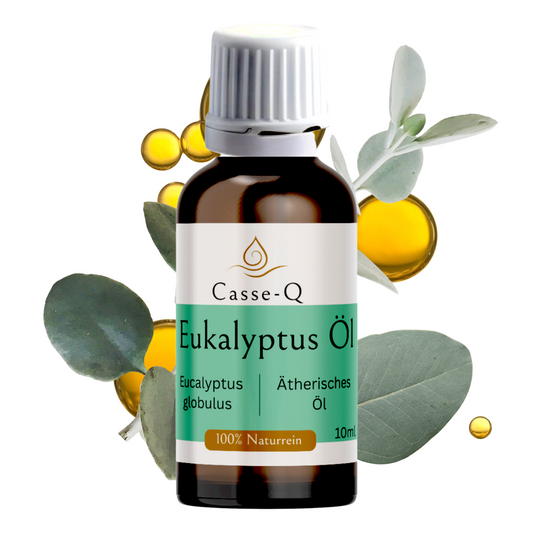
Cats can only break down many essential oils to a very limited extent, or not at all, because they lack a specific liver enzyme (glucuronyl transferase). This means substances that are harmless to humans, and even to dogs, can accumulate in a cat's body and lead to serious poisoning – tea tree oil, citrus oils, and eucalyptus are considered particularly risky. Our clear recommendation: in households with cats, you should generally avoid diffuser use, or at least make sure your cat can always leave the room. Direct application to fur or skin is an absolute no-go for cats.
🐕 Dogs: possible with caution and distance
Dogs generally tolerate essential oils better than cats, but the same principle applies: a dog's sense of smell is many times more sensitive than ours – what smells subtle to us can be overwhelming for a dog. Diffusers should therefore only be used sparingly and in a room the dog can always leave. Direct application to skin or fur should only be done after consulting a veterinary naturopath or vet, or using products specifically formulated and heavily diluted for dogs – never with undiluted essential oil straight from the bottle.
🐴 Horses: traditionally used outdoors
In the equestrian world, essential oils have a longer tradition, for example as a natural insect deterrent in summer or to freshen stable air. Here too: always heavily diluted (e.g. in a carrier spray), never near the eyes, nose, or mucous membranes, and always test on a small patch of skin before first use. Lemongrass and eucalyptus oil are traditionally used in fly sprays – but usually not undiluted, rather incorporated into specially balanced formulas.
What our "pet care" oils are intended for
The oils and blends in our pet care category – such as Naturwächter with garlic, lavender, tea tree, and clove, or Naturschild with lemon eucalyptus, lemongrass, and clove – are primarily intended for scenting rooms and surrounding areas: in the stable, the kennel, or as a natural scent barrier in the garden, not for direct application to the animal itself. This way, you benefit from the deterrent scent effect without your pet having direct skin contact.
Safe ground rules at a glance
- Households with cats: best to avoid essential oils entirely, or only diffuse when the cat is absent and can otherwise retreat
- Never apply undiluted oil directly to skin, fur, or paws
- Always place diffusers in a room your pet can leave
- When in doubt, ask a vet or veterinary naturopath beforehand
- At the first signs of discomfort (drooling, restlessness, vomiting), get fresh air immediately and seek veterinary advice
Frequently asked questions about essential oils and pets
Are essential oils toxic to cats?
Many essential oils can be toxic to cats because they lack a key enzyme needed to break them down. We recommend particular restraint in households with cats.
Can I use essential oils in a diffuser around my dog?
In small doses and in a room the dog can leave, this is usually fine – check with a vet first if your dog has any pre-existing health conditions.
Which essential oils are used for horses?
Lemongrass and eucalyptus oil are traditionally used for insect protection, but always heavily diluted and never applied undiluted to the skin.
Can I apply essential oil directly to my pet's fur?
No, we generally advise against this. Use room scenting instead, or specially formulated, diluted products for pets after consulting a professional.
🌿 Casse-Q – Natural oils with character
A responsible approach to scent – including for the four-legged members of your family. If you're unsure, we always recommend checking with a vet.