Smell training with essential oils: a guide for when your sense of smell is gone
The coffee smells of nothing, your favourite meal tastes flat, and you no longer notice the scent of your own home. Only when you lose your sense of smell do you realise how much it shapes everyday life. Many people looking for advice come across smell training (also called olfactory training), a method from ENT research in which you consciously smell four scents every day. Here we explain what is behind it, how it works and what to bear in mind.
Important first: we are a producer of essential oils, not doctors. This guide provides information about a method; it does not replace a diagnosis or treatment. If you lose your sense of smell, your first step should be an ENT specialist.
Anosmia, hyposmia, parosmia: what the terms mean
- Anosmia: the sense of smell has gone completely.
- Hyposmia: smells are only perceived faintly.
- Parosmia: smells come across distorted, often unpleasant. Coffee suddenly smells burnt, onions rotten. This often occurs during the recovery phase after a loss of smell.
- Phantosmia: you smell something that is not there.
Because flavour is largely created through the nose, many people first notice the loss of smell when eating. The tongue still registers sweet, sour, salty and bitter, but the aroma is missing.
Common causes of loss of smell
Doctors broadly distinguish two groups: either the scent molecules never reach the olfactory mucosa high up in the nose, or the olfactory cells and nerve pathways themselves are affected.
When the scent does not get through
- Chronic sinusitis, often with nasal polyps
- Samter's triad (also called AERD or N-ERD): a combination of nasal polyps, asthma and intolerance to certain painkillers such as aspirin
- Allergies and permanently swollen mucous membranes
- A badly deviated septum or other narrowing inside the nose
When olfactory cells or nerves are affected
- After viral infections: one of the most common causes of all, widely known since Covid-19, but also possible after colds and flu
- Head injuries, for example after a fall or concussion
- Ageing: in many people the sense of smell declines from around the age of 60
- Neurological conditions such as Parkinson's or Alzheimer's, in which a declining sense of smell can appear early
- Certain medications, chemotherapy or radiotherapy
- Smoking and long-term exposure to solvents or other pollutants
- Rarely: a congenital absence of the sense of smell
Why the cause should be clarified first
Depending on the cause, the options look completely different. With polyps or chronic inflammation, as in Samter's triad, medical treatment of the mucous membranes comes first. As long as the nose is blocked, no scent reaches the olfactory cells, however intense it is. After a viral infection, on the other hand, the pathways are clear and the olfactory cells need to regenerate and reconnect.
An ENT specialist can use a simple smell test (for example the so-called Sniffin' Sticks) to measure how much the sense of smell is impaired, and look for the cause. A sudden or one-sided loss of smell without an obvious reason should always be checked by a doctor.
What is smell training?
Smell training was introduced in 2009 by a research group led by Prof. Thomas Hummel at the Interdisciplinary Center for Smell and Taste at Dresden University Hospital. The idea: our olfactory cells renew themselves throughout life. Regularly and consciously smelling familiar scents gives this system a recurring stimulus, much like training.
Since then the method has been examined in numerous studies. The evidence is strongest for loss of smell after viral infections. It is now part of the German clinical guideline on smell and taste disorders and is recommended by many ENT doctors. How well and how quickly it works in an individual case cannot be predicted. It is not a quick trick, but a matter of months.
The four classic scents
In the original protocol, four scents represent four very different scent categories, so that the sense of smell is addressed as broadly as possible:
| Scent category | Scent | Essential oil |
|---|---|---|
| Floral | Rose | Rose oil |
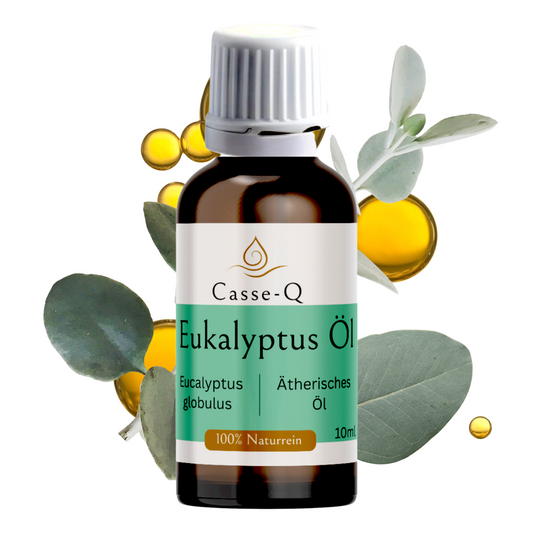
| Fresh, resinous | Eucalyptus | Eucalyptus oil |
| Fruity | Lemon | Lemon oil |
| Spicy | Clove | Clove oil |
A word about rose: genuine rose oil is the most precious oil in our range. For smell training, however, even the smallest bottle lasts many months, because you only smell it and use hardly any. More important than the brand is that all four oils are pure and smell clearly different.
Smell training: step-by-step guide
- Prepare: put the four bottles in a fixed place, for example next to your toothbrush. That turns the training into a routine.
- Twice a day: once in the morning, once in the evening.
- Open and smell at a distance: hold the open bottle a few centimetres below your nose and smell with short, calm sniffs for about 10 to 20 seconds. Do not inhale deeply.
- Remember consciously: while smelling, concentrate on how rose, eucalyptus, lemon or clove ought to smell. Think of a situation in which you used to notice the scent. This part is at least as important as the smelling itself.
- Short pause: breathe normally for about 10 seconds between scents.
- Take notes: a short entry each week (nothing, faint, distorted, recognisable) makes progress visible that you would otherwise overlook.
Alternatively, put one drop each on a scent strip or cotton pad and keep it in a small screw-top jar. This is practical when several people are training, as nobody's nose touches the bottle.
How long does smell training take?
Studies generally work with at least 12 weeks, often 4 to 6 months or longer. Regularity matters, not intensity. More drops or longer sniffing make no difference.
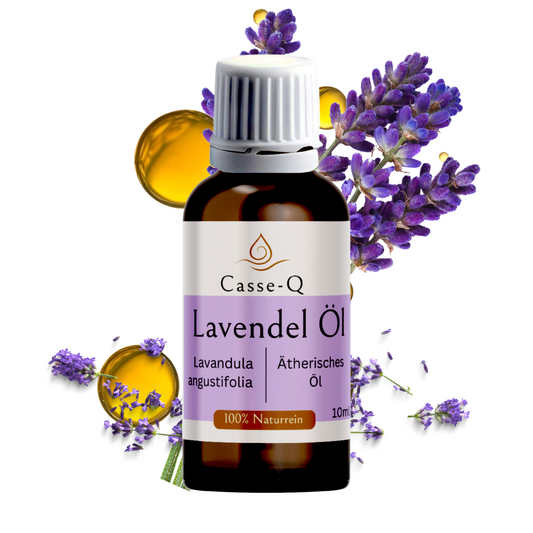
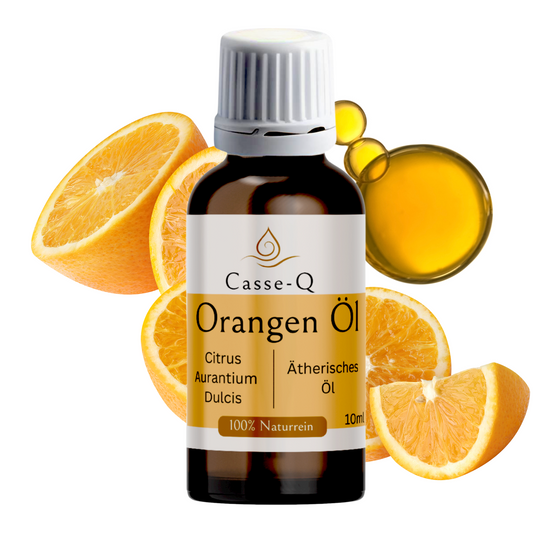
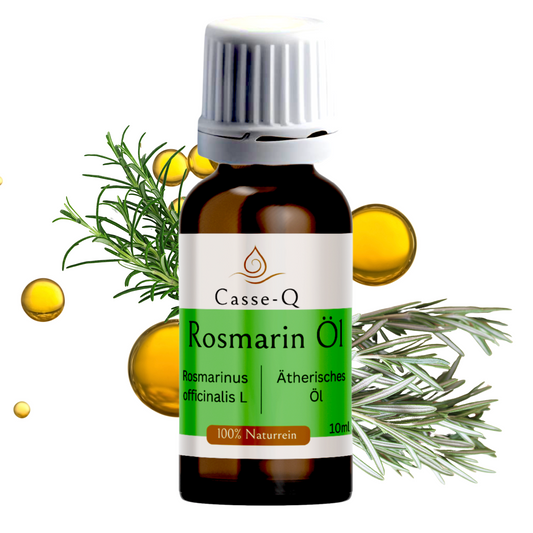
After around 12 weeks, some programmes switch to four new scents to give the sense of smell fresh stimuli. From our range, lavender, peppermint, orange and rosemary would work, again four clearly distinguishable directions.
Especially during recovery, many people report parosmia: scents suddenly smell strange or unpleasant. That is frustrating, but the specialist literature tends to see it as a sign that something is happening in the olfactory system. Talk to your doctor about it anyway.
Safety: what to watch out for
- Asthma and sensitive airways: intense oils such as eucalyptus or clove can irritate the airways. Anyone with asthma, for example as part of Samter's triad, should discuss smell training with their doctor first, keep a particularly good distance and only smell very briefly.
- Nothing in the nose: essential oils do not belong on or in the nasal mucosa, not even diluted.
- No steam, no diffuser: training means smelling briefly and deliberately. Steam inhalation or a diffuser right in front of your face is not intended for this.
- Children: eucalyptus oil should not be used near the faces of babies and toddlers. For children, always agree the training with a paediatrician.
- Do not swallow, do not apply undiluted to the skin, and keep the bottles out of the reach of children.
- If a scent causes discomfort, headaches or shortness of breath, leave it out.
Frequently asked questions about smell training
Can I use other essential oils?
Yes. What matters is that the four scents are clearly different from each other and that you know them from before. Rose, eucalyptus, lemon and clove is the best-studied combination, but not a must.
How much oil do I need?
Very little. If you smell directly from the bottle, a 10 ml bottle lasts many months. Close it straight away afterwards so the oil does not evaporate or age prematurely. Our guide to storage and shelf life explains how to keep essential oils properly.
I cannot smell anything at all. Is training still worthwhile?
That is exactly when imagining the scent matters. The training is also aimed at people who perceive nothing at first. Whether it makes sense for your particular cause is best discussed with your ENT specialist.
Does smell training help with nasal polyps?
As long as polyps or inflammation block the nose, scents do not reach the olfactory cells. Medical treatment comes first here. Whether and when smell training makes sense as a complement is up to the treating doctor.
Why pure oils rather than fragrance oils?
Synthetic fragrance oils often recreate only part of a scent. Pure essential oils contain the full scent profile of the plant, the way you know it from experience. We have summarised how to recognise real quality in a separate article: Buying essential oils: how to recognise real quality.
How quickly will I notice something?
That varies a great deal. Some notice first changes after a few weeks, others only after months, some not at all. Persevering and keeping regular notes helps you not to overlook small steps forward.
All the oils in this guide, with botanical name, origin and batch number, are in our essential oils overview. Hand-filled in Germany, in small batches.