Skincare & Massage
Essential oils are highly concentrated and never belong on skin undiluted. What you need is a carrier oil.
The carrier decides the texture, absorption and shelf life of the finished blend at least as much as the essential oil does. You'll find both here, plus the ratios to work with.
-
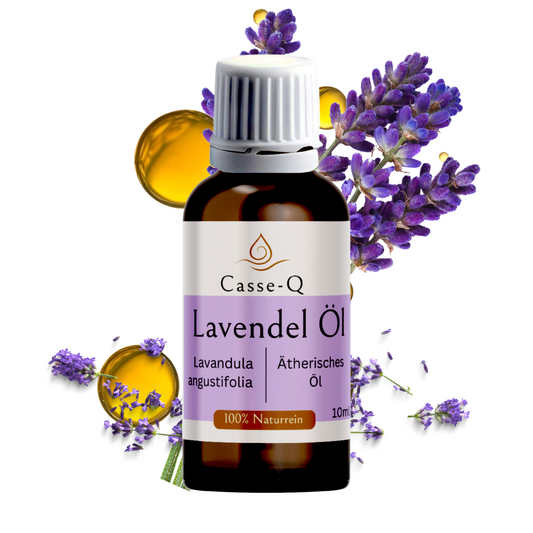
Lavender Oil
Regular price From €6,95 EURRegular priceUnit price €695,00/L -
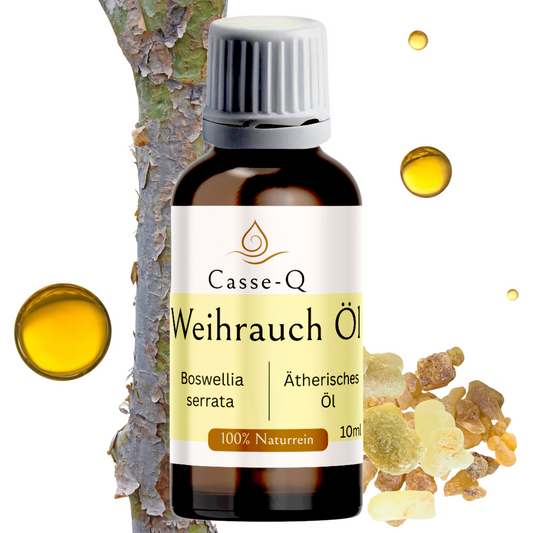
Frankincense Oil / Frankincense Oil (Olibanum)
Regular price From €7,95 EURRegular priceUnit price €795,00/L -
Castor oil
Regular price From €7,95 EURRegular priceUnit price €79,50/L -
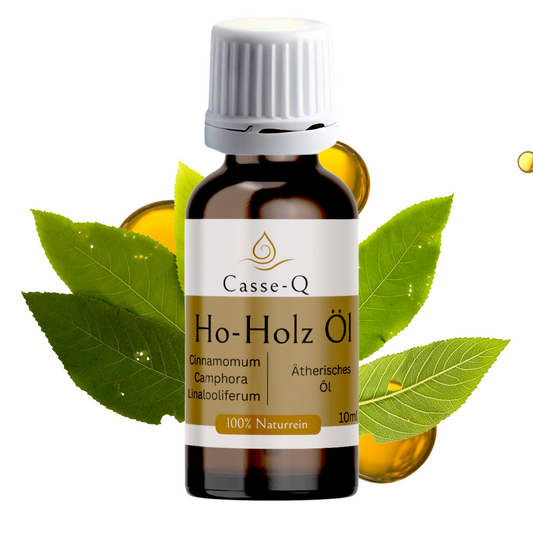
Ho-Wood Oil
Regular price From €6,95 EURRegular priceUnit price €695,00/L -
Ylang Ylang Oil / Ylang Ylang Oil
Regular price From €9,95 EURRegular priceUnit price €995,00/L -
Patchouli Oil
Regular price From €8,95 EURRegular priceUnit price €895,00/L -
Jojoba oil
Regular price From €9,95 EURRegular price -
Almond oil
Regular price From €7,95 EURRegular price -
Avocado oil
Regular price From €9,95 EURRegular price -
Roman Chamomile Oil
Regular price From €29,95 EURRegular priceUnit price €2.995,00/L



How many drops to how much carrier oil?
One drop is roughly 0.05 ml. That gives these guide values:
- 1 % – face, sensitive skin, children from 6: 3 drops in 10 ml, 15 in 50 ml, 30 in 100 ml
- 2 % – body, daily use: 6 drops in 10 ml, 30 in 50 ml, 60 in 100 ml
- 3 % – massage, localised: 9 drops in 10 ml, 45 in 50 ml, 90 in 100 ml
- 5 % – short-term, small areas: 15 drops in 10 ml, 75 in 50 ml, 150 in 100 ml
As a rule you don't go above 5 %. More essential oil doesn't mean more scent in the result, only a lower irritation threshold.
Four points before your first blend
Patch test. One drop of the finished blend in the crook of your arm, wait 24 hours. This applies to every new essential oil.
Citrus oils and sun. Cold-pressed citrus oils contain furocoumarins and are phototoxic. Avoid direct sun for twelve hours after applying.
Not in the eyes, not on mucous membranes. If it happens: remove with a carrier oil, not water – essential oils aren't water-soluble.
Pregnancy, small children, pre-existing conditions. Different rules apply here than we can set out generally. Please clarify with a doctor beforehand.
The four carrier oils compared
- Almond oil – light, absorbs at a medium pace, keeps around 12 months. All-rounder for massage and large areas.
- Jojoba oil – light and waxy, absorbs quickly, keeps three years and more. For the face and for long-lasting blends.
- Avocado oil – heavy, absorbs slowly. As a component at 10 to 30 percent.
- Castor oil – very thick. Only as a component at 5 to 10 percent.
Allergy note: almond oil comes from a tree nut and is a declarable allergen.
Which essential oil suits a massage blend?
Unlike with a diffuser, what counts here isn't only the scent but also how far it goes. Some oils are so intense that a single drop dominates the whole blend. Patchouli is one such case – earthy, heavy, extremely assertive. One drop in 30 ml is enough as a base note. Ylang-ylang behaves similarly.
The middle notes are more forgiving. Lavender is the classic because it gets along with almost everything. Ho wood goes in a similar direction, a little softer and woodier. Frankincense brings a resinous depth.
With the two most expensive oils, the small sizes are worth a look: Roman chamomile and rose oil are so intense that one drop in 10 ml of carrier oil is enough.
Making up a blend
Take a dark glass bottle in a size you'll use up within a few weeks. Add the essential oils first, then top up with the carrier oil. Close it and roll it briefly between your palms rather than shaking. Label it with the date and the composition.
Small quantities beat large ones. A 50 ml blend on an almond oil base is at the end of its freshness after three months.
Frequently asked questions
Can I apply essential oils neat to skin?
No. They are highly concentrated and can cause skin irritation and sensitisation when undiluted. Always mix with a carrier oil.
Which carrier oil is the right one?
Almond oil for massage and large areas. Jojoba for the face and for blends meant to keep.
How long does a homemade blend keep?
As long as its shortest-lived carrier oil. On an almond or avocado base, around three to six months; with jojoba, considerably longer.
Are your carrier oils cosmetic products?
No, we sell them as raw materials for your own blending. What you make from them is up to you.
Our blends
-
Forest Love: Juniper, Cedarwood, Nutmeg, Lemon
Regular price From €9,95 EURRegular priceUnit price €995,00/L -
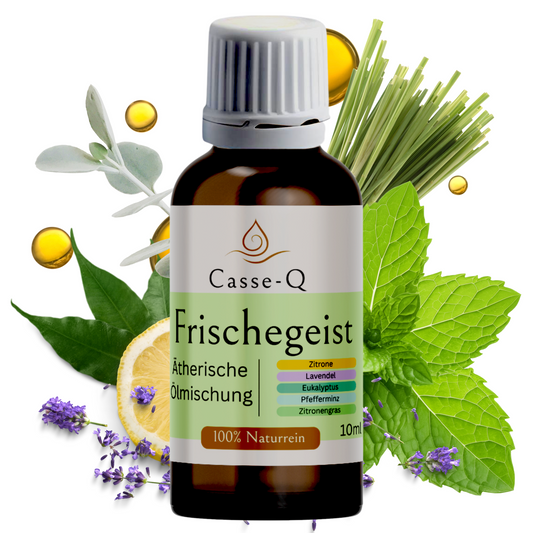
Fresh Spirit: Lavender, Peppermint, Eucalyptus, Lemon, Lemongrass
Regular price From €9,95 EURRegular priceUnit price €995,00/L -
Herbal Breeze: Eucalyptus, Thyme, Peppermint, Rosemary
Regular price From €9,95 EURRegular priceUnit price €995,00/L -
Winter Warmth: Cassia, Clove, Orange, Swiss Stone Pine
Regular price From €9,95 EURRegular priceUnit price €995,00/L